Home > Signs of previous accident repairs or paint job in a used car
Signs of previous accident repairs or a paint job in a used car
We have seen many used cars that have been restored after accidents on the used car market. Some dealers will disclose previous collisions, some might not even be aware. There are 3 steps to check if the used car has been involved in an accident:
- Check the used car history records. Many accidents (but not all) are reported and the used car history report may show this.
- Inspect a car body for signs of accident or rust repairs; see photos below.
- Have the used car properly inspected by a knowledgeable mechanic or a used car inspector before signing the deal.
Check if the panels are lined up, look at the side reflection
 All panels are lined up perfectly. |
 The rear fender looks uneven. |
 The clear coat is peeling off. |
 There is some unevenness around the gas tank lid. |
Check how body panels fit together
 The rear door is not flush when closed. |
 The front bumper is not secured properly. |
 The front door is not lined up with the rear door. |
Check if the color of different panels match
The trick is to look from the distance and from different angles. This way it's easier to spot the difference.
 Look from different angles, see the next photo. |
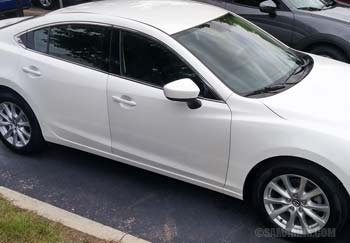 The color of the front door doesn't match. |
 The bumper color looks different from the rest of the car. |
Compare opposite sides
 The gap between panels looks too wide. |
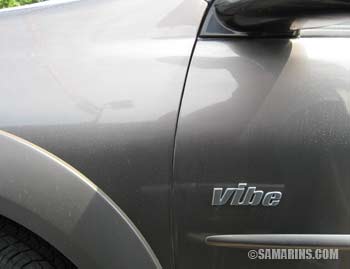 The gap between panels is too small. |
 Compare to the next photo. |
 This area shows signs of a collision repair. |
Check the headlights
 Moisture inside the headlight. |
 The left headlight looks old, while the right headlight is new.
Look at this Honda Civic. The left headlight is old (original), but the right headlight looks new. It even has a different manufacturer marking. After a close inspection we found that the right front corner has been hit, although the damage was minor. |
Watch out for difference in the paint texture
 Sanding marks. |
 The paint texture looks uneven. |
Look for paint overspray
 Paint overspray. |
Look for peeling paint
 The paint is peeling off. |
Check the bolts that hold the hood
 These bolts look like they had been repositioned. |
 These hood bolts look original.
Many cars have a sticker attached to the hood. This car in the photo has an original sticker. If the sticker is missing or looks like it was re-attached, it's possible that the hood has been replaced. |
Check the frame if it's a pickup truck
 This truck's frame looks OK. |
Avoid previously flooded cars
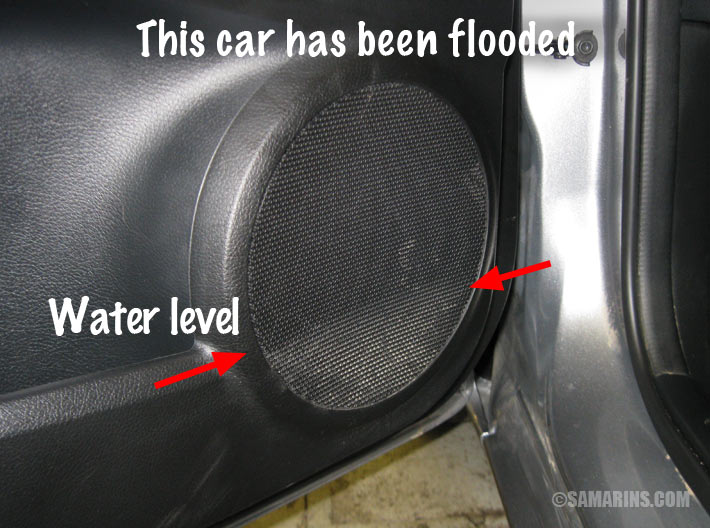
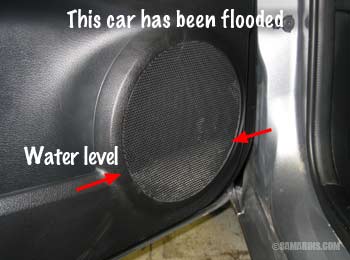 Flood mark.
Avoid used cars that have been flooded. A flooded vehicle is more likely to develop various electrical problems and mold in the future. Flash floods are very common these days. This car looks fairly clean and runs good, but something doesn't look right about this speaker cover. It shows a dirty water level mark. Was this car flooded? |
 Flood mark visible in the car. |
Is it OK to buy a car that has rust damage?

Rust damage.
The rust is a major issue in used cars, especially the ones that have been driven where salt is used on the roads in winter months. Unless the car has been properly rust-proofed, any 7-10 year old and older car or truck from the Rust Belt will show some
rust. Rust damage can be repaired temporarily, but once the corrosion process is started, it's very difficult to stop. The metal used in modern cars is better, but rust problems have not been eliminated. If a car had major rust spots repaired, the rust will re-appear later. More importantly, if the body shows rust on the outside, the underneath parts are more likely badly rusted too. Check, for example, these
brake lines, or this
subframe. Both are a safety concern. For this reason, the cars that show major rust should be avoided.
Where does the rust usually start? You are more likely to find rust at the bottom edges
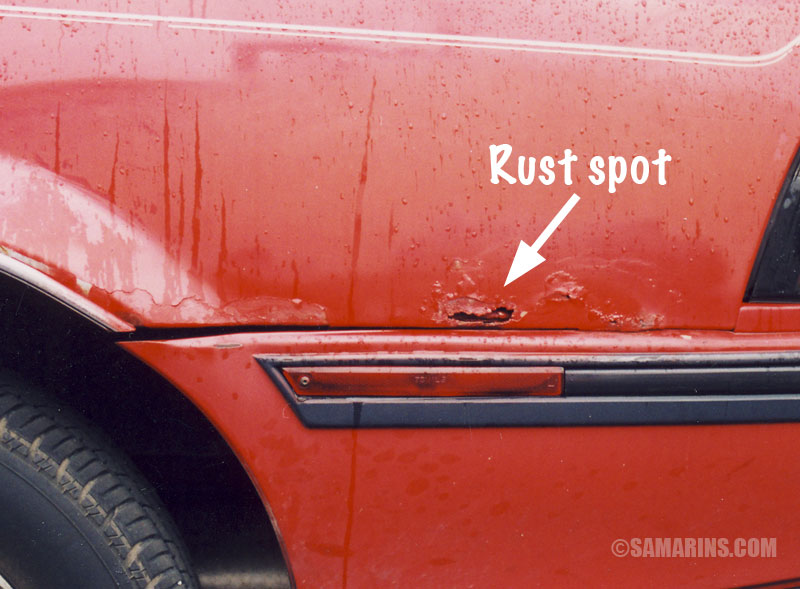
of the doors and around the wheel wells. In this car, it's just starting, but in a few years this door will look bad if not treated. This
rust spot has already been repaired and now the rust shows again. If you suspect a repaired rust spot, try sticking a small magnet; it won't stick if there is too much filler over the metal.
These
transmission cooler lines are badly rusted, but you won't see them from the outside. In this car, they are hidden behind the spash guard, under the radiator.
These rusted lines can burst when scraping the curb while parking, on when driving over bumps, leaving you stranded. That's another reason why we recommend having a used car inspected by your mechanic before buying it.
Should you buy a car that has been in an accident? Unless it was a minor fender-bender like in
this photo, we don't recommend it. We don't want to say that a damaged car cannot be restored to a like-new condition; there are plenty of collision repair shops that do an excellent job. The problem is that for an average buyer it's difficult to tell if a car has been repaired to the highest standards or was "patched up" for a quick sale.
This means that buying a car that has been restored after a serious accident is taking a chance. Were repairs done properly or the rust spots will appear after a year or two? Will the paint peel away or fade? Has the wheel alignment been done right or the tires will be wearing fast? Will the air conditioner still work after a few months? Was the front-sensing camera re-calibrated after windshield replacement?
 All panels are lined up perfectly.
 The rear fender looks uneven.
  The clear coat is peeling off.
 There is some unevenness around the gas tank lid.
  The rear door is not flush when closed.
  The front bumper is not secured properly.
 The front door is not lined up with the rear door.
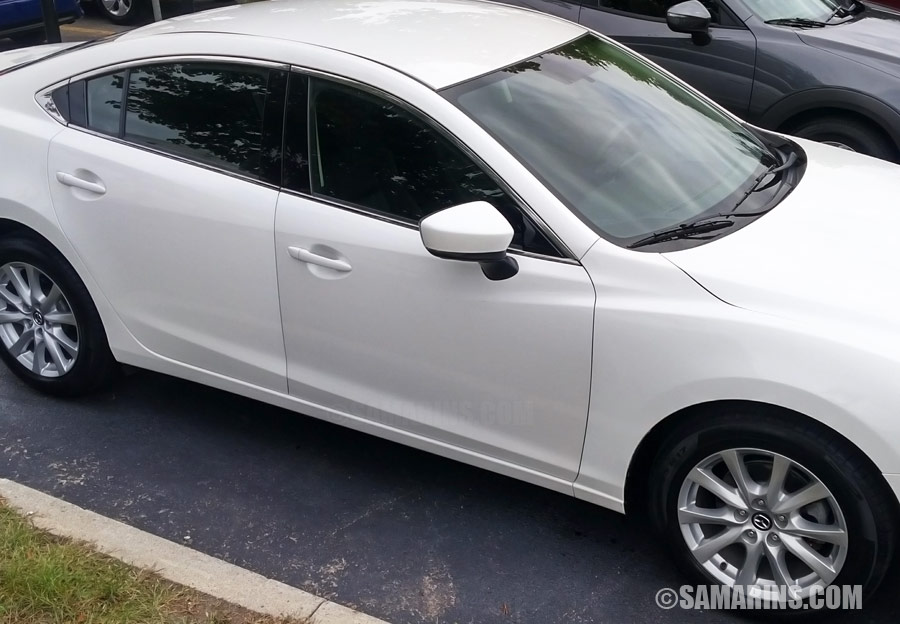 The color of the front door doesn't match.
 The bumper color looks different from the rest of the car.
 The gap between panels looks too wide.
 The gap between panels is too small.
 Compare to the next photo.
  This area shows signs of a collision repair.
  Moisture inside the headlight.
  The left headlight looks old, while the right headlight is new.
 Sanding marks.
  The paint texture looks uneven.
 Paint overspray.
  The paint is peeling off.
  These bolts look like they had been repositioned.
  These hood bolts look original.
  This truck's frame looks OK.
 Flood mark.
  Flood mark visible in the car.
 Rust damage.




 © Samarins.com 2000–2025. All rights reserved.