Honda Pilot 2009-2015: pros and cons, common problems
By Vlad Samarin Updated: February 04, 2023.
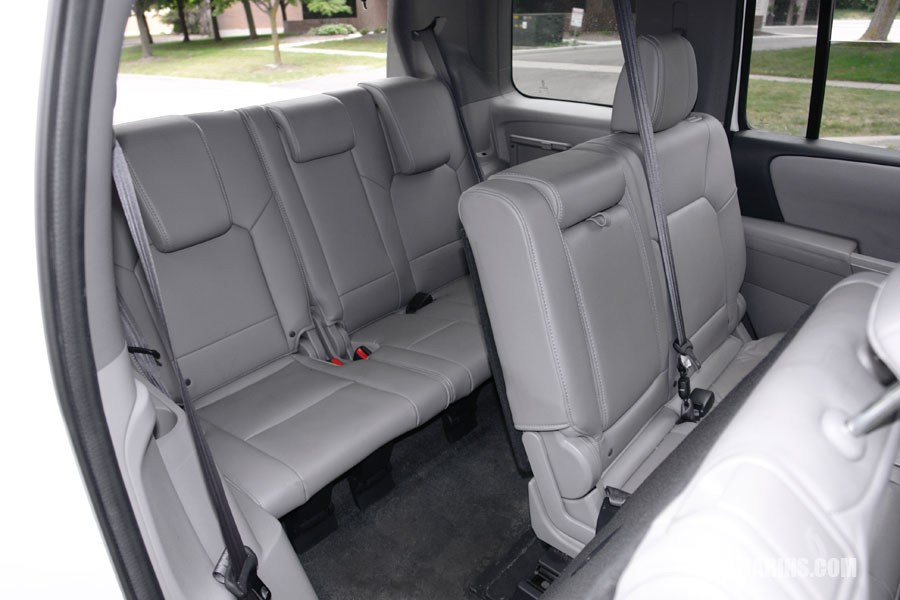
The Honda Pilot is one of the few SUVs that still looks like a truck. The Pilot is an 8-seater with three rows of seats. It has a roomy, well-equipped interior with plenty of storage options.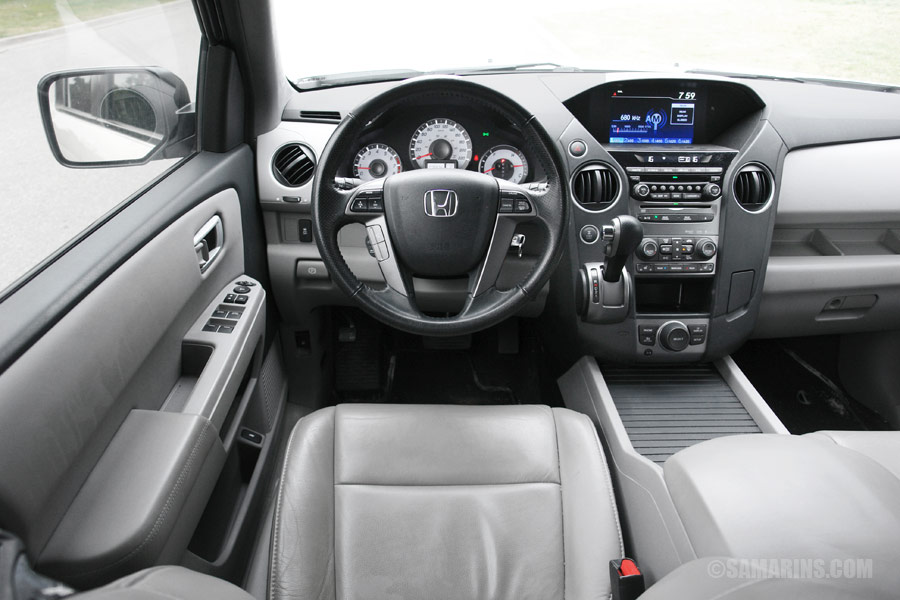 2014 Honda Pilot interior.
 The Pilot offers a comfortable driving experience and a smooth ride. Reliability ratings are mixed What are the pros and cons and common problems? How capable is the AWD system? Which model years received the most complaints? Let's start with pros and cons.
Pros:
- Rugged truck-like shape.
- Practical, roomy interior, third row seating.
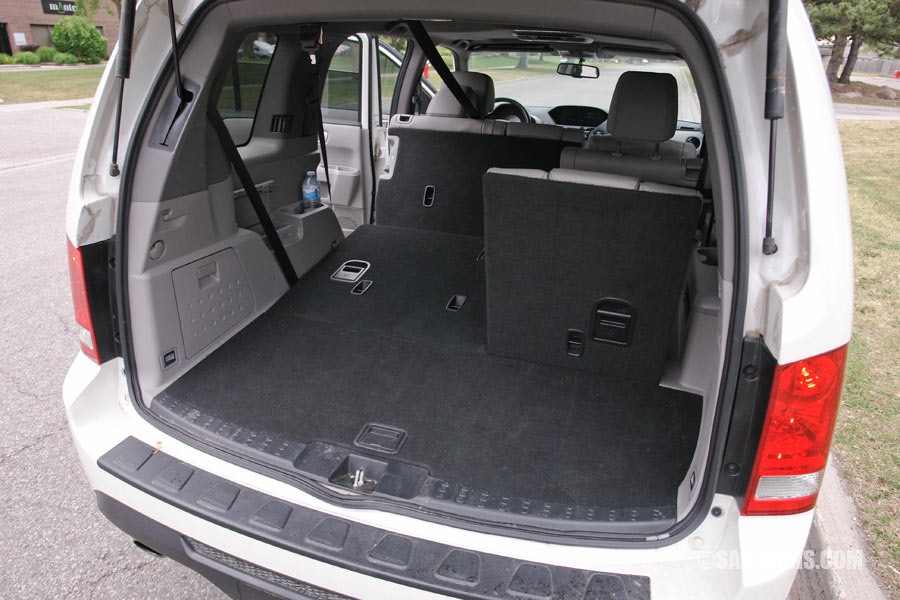
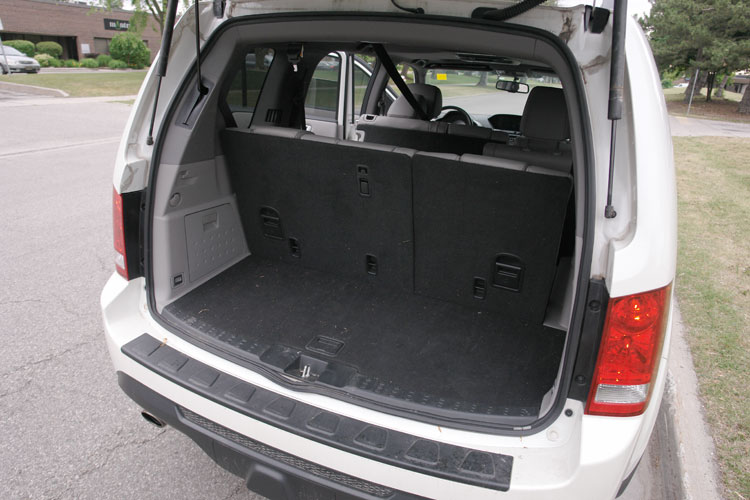
- Cargo space, liftgate glass opens separately.
- 4,500-lb towing capacity (AWD).
- Comfortable driving experience, smooth ride.
- Dashboard design. Available features.
- Generally reliable, can last long with good care.
- Interior materials could be better.
- No button to disable VCM.
- Timing belt replacement is not cheap.
- Some exterior panels are prone to rust.
- Maintenance and repairs can be costly at higher mileage.
With age, the spool valve (VVT oil control valve) that is located right above the engine oil dipstick tends to leak. Over time, the oil leaking from the spool valve onto the alternator, which is just below, can cause it to fail. If the spool valve is OK, the gaskets must be replaced to fix the issue. The repair is not very expensive. Watch this video showing the repair.
Wheel bearings can become noisy. Replacing one wheel bearing costs from $270 to $380; this problem is fairly common in many cars.
Several Honda Pilot owners mentioned that the engine consumes oil and advised doing oil changes sooner than suggested by the Maintenance Minder. Considering this, we would recommend checking the oil level regularly between the oil changes (see how) and top up if needed. There is no warning light that would warn the driver if the oil level is low; it must be checked manually.
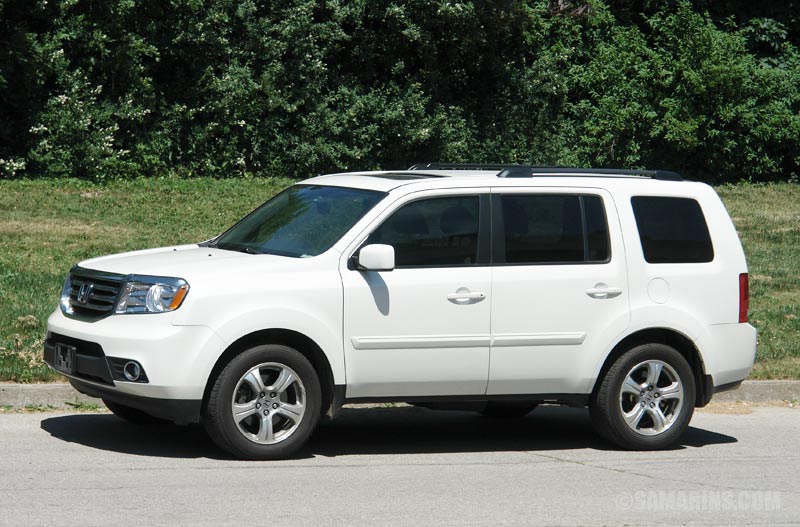 2014 Honda Pilot.
 When the Check Engine light comes on and there is a misfiring code, spark plugs must be checked.
According to Alldata, the ticking noise at idle in the 2009-2011 Honda Pilot could be caused by an issue with rocker shafts. The suggested repair is easy. Read this article for details.
A sticking A/C relay can cause the battery to drain fast and the A/C not to work intermittently. Luckily, it's an inexpensive part and is easy to replace. Watch these videos.
Like in many other heavy vehicles of this type, leaking struts and shock absorbers, bad lower control arm bushings, as well as bad sway bar links, are fairly common at higher mileage. Replacing both front struts will cost from $700 to $1,150. Changing sway bar links and rear shock absorbers is not very expensive.
Advertisement
Lower control arm (compliance) bushings will cost $550-$720 to replace if out of warranty. According to the Honda TSB 15-045 the warranty has been extended for the 2009-2014 Pilot. Read more in this thread at Piloteers.org.
Many owners mentioned the center arm rest and door pad wearing off.
Honda has issued several recalls for the Honda Pilot; check on the NHTSA website.
Summary: Overall it's a great people mover, but it needs to be maintained well to last and repairs at higher mileage can be costly. The 2009, 2010 model years received more complaints; later years are better. The 3.5L V6 engine is not bad, but several owners suggested that it would help if there was a button to disable the VCM, since some of the engine issues are related to this feature. There are plenty of discussions on the internet on this subject; google "disable VCM." NHTSA has awarded the 2011-2015 Pilot a four-star overall crash test rating.
Related articles:
Toyota Venza 2009-2015
Toyota Highlander 2008-2013
Subaru Outback 2010-2014
Nissan Pathfinder 2013-2019
Used Mazda CX-9 2007-2015
Toyota RAV4 2013-2018
Ford Edge 2007-2014
3.5L V6 Engine: The Pilot comes with the 3.5L J35 SOHC V6 engine with Variable Cylinder Management or VCM. VCM helps improve the highway fuel economy by shutting down two or three cylinders during steady cruising under low or moderate loads. Of course, when you step on the gas, all 6 cylinders kick in and you get all 250 horsepower. Overall, it's a good engine, but it needs to be well maintained to last.
Timing belt or chain: The 3.5L J35 V6 engine has a timing belt that must be changed at recommended intervals. If you drive regularly in very high or very low temperatures, or tow a trailer, Honda recommends replacing the timing belt every 60,000 miles/100,000 km (sources: 2014 U.S. Pilot owner's manual).
Fuel Economy: The 2012-2015 Honda Pilot AWD is rated at 17/24 mpg or 20 mpg combined, which is not too bad for an SUV of this type. The Pilot has a 21-gallon (79.5 liters) tank. On a full tank, you can expect to cover up to 462 miles (744 km) on a long trip. See the table for details.
| Honda Pilot EPA fuel economy: | mpg city/hwy |
L/100 km city/hwy |
| 2012-2015 3.5L FWD auto | 18/25 | 13.1/9.4 |
| 2012-2015 3.5L AWD auto | 17/24 | 13.8/9.8 |
| 2009-2011 3.5L FWD auto | 17/23 | 13.8/10.2 |
| 2009-2011 3.5L AWD auto | 16/22 | 14.7/10.7 |
If the vehicle has been used for towing a heavy trailer, the transmission might be worn; watch out for sagging rear springs and excessive wear of the trailer hitch. During the test drive on the highway, watch out for vibration. The vibration can be caused by many reasons including tires, CV-axles, issues with AWD system and engine mounts. If the vibration starts in the ECO mode, it could be related to the VCM operation. Read this thread.
Before buying a used Honda Pilot, have it properly inspected, preferably at a different Honda dealer. Consider getting a good extended powertrain (engine and transmission) warranty. If low maintenance costs are important and having only two rows of seats is not a deal breaker, we recommend the Honda CR-V, Mazda CX-5 and Toyota RAV4.
Honda Pilot VTM-4 AWD system: The Pilot VTM-4 is a front-biased on-demand AWD system, which means that front wheels are always powered and some amount of torque is sent to the rear wheels when needed.
According to the Honda Pilot press release, the VTM-4 is designed for all-weather on-road and medium-duty off-road performance. This system works well if you have good tires; the extra weight of the V6 engine over front wheels gives enough traction and the rear wheels kick in when needed.
We also found these videos showing Honda Pilot off-road capability. The Pilot's AWD system maintenance includes regular inspection for leaks, changing fluids in the transfer case and rear differential, as well as inspection of the drive (propeller) shaft. It's also important to have correct tire pressure in all tires.
How does the VTM-4 Lock function work? The VTM-4 LOCK only works in gears 1, 2 and Reverse. It doesn't lock the rear differential mechanically, but rather increases the amount of torque to the rear wheels.
We checked the owner's manual for the U.S. 2014 Pilot. On page 354 it says "Do not use the VTM-4 LOCK button on dry, paved roads." The manual recommends using this function to help free your vehicle from being stuck in mud, sand, or gravel, but advises that when more torque is applied, the rear tires are not likely to spin. This is normal. You can check the online Honda Pilot owner's manual here: Honda Owners.
Photos:

 © Samarins.com 2000–2024. All rights reserved.