Serpentine belt, tensioner: problems, signs of wear, when to replace, noises
Updated: November 17, 2018
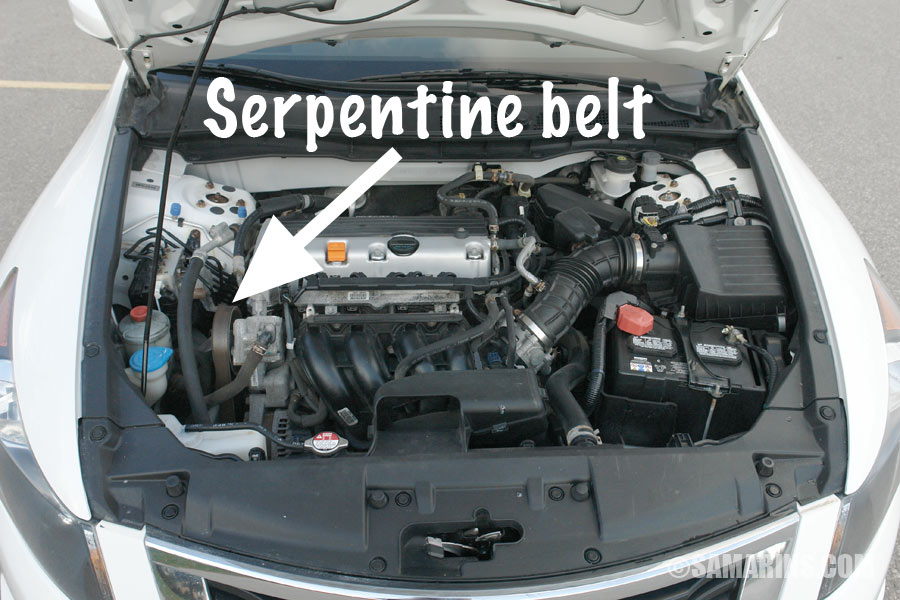
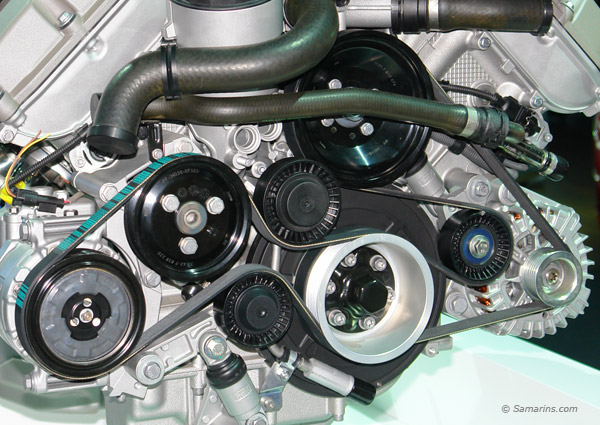 Serpentine belt.
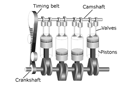
 A serpentine belt is different from a timing belt. A timing belt runs the engine camshaft(s) and is hidden under protective covers. A serpentine belt is located on the side of the engine and can be inspected from under the hood. What happens if a serpentine belt breaks? What can cause a belt to squeal? When should you replace a serpentine belt? How expensive is it?
What happens if a serpentine belt breaks?
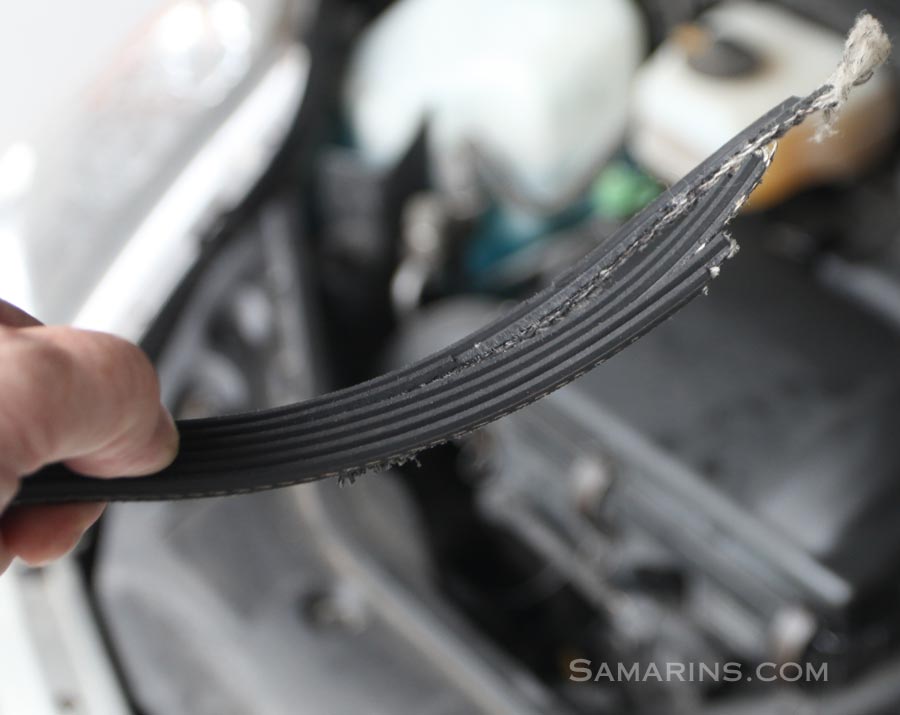 Broken serpentine belt.
 Symptoms of a broken serpentine belt include loud slapping, squealing or knocking noises coming from under the hood. The battery-shaped charging system warning light might also come on because the alternator will stop charging the battery. If a car has a hydraulic power steering pump, the steering will become stiff.
Common belt and tensioner problems that can cause a belt to break or produce noises
Here are several common problems: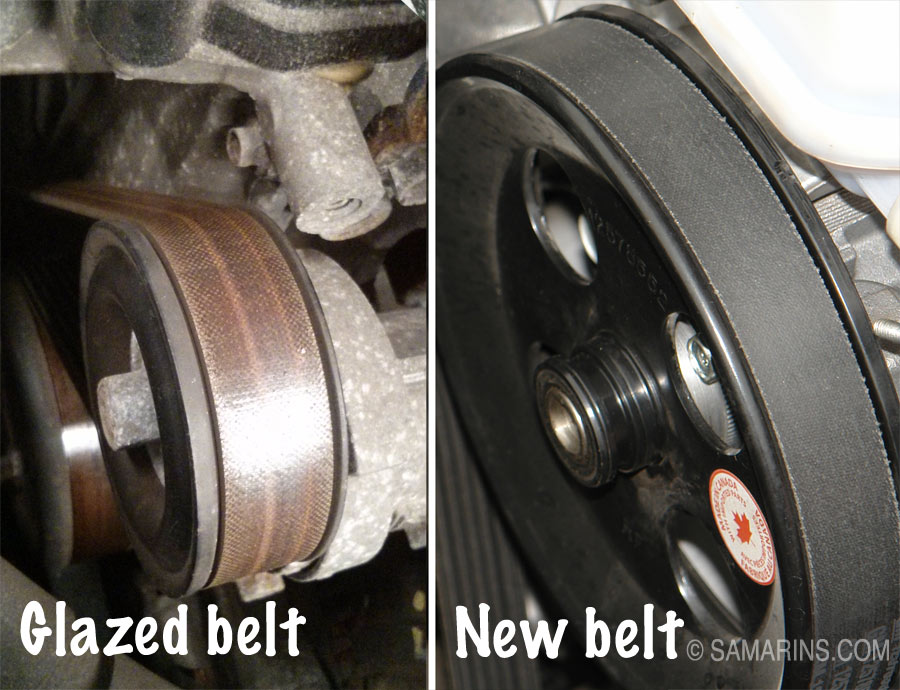 Glazed serpentine belt vs. a new belt.
 1. Regular wear and tear. A new serpentine belt has a soft felt-like surface on the ribbed side. As the belt wears out, the belt rubber hardens and cracks; scroll down to see the photo of a cracked belt. A worn-out belt stretches and loses tension. This causes the belt to start slipping from time to time. You might hear it when the engine is started in the morning or in wet weather as squealing or chirping noises coming from under the hood. The belt may also appear glazed as in this photo.
If there are no other problems and the belt tensioner is in good shape, a new serpentine belt should fix this problem. Replacing a serpentine belt costs from $18-$75 part plus $50-$150 labor.
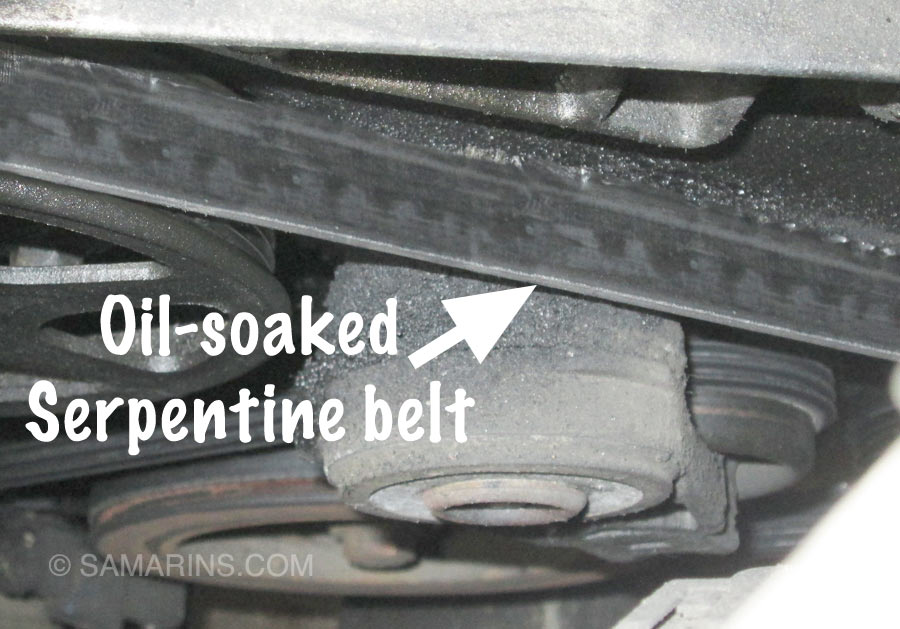 Oil leaks can damage a serpentine belt in a short period of time.
We have seen a new serpentine belt that lasted less than a week in an engine that leaks oil around the belt area. In this case, there is no point installing a new belt. Oil leaks have to be fixed first.
Price to repair oil leaks will depend on the source of the leak. Replacing a valve cover gasket is not expensive ($120-$300), but if the leak is coming from a camshaft seal or other sources, the repair will be more complicated.
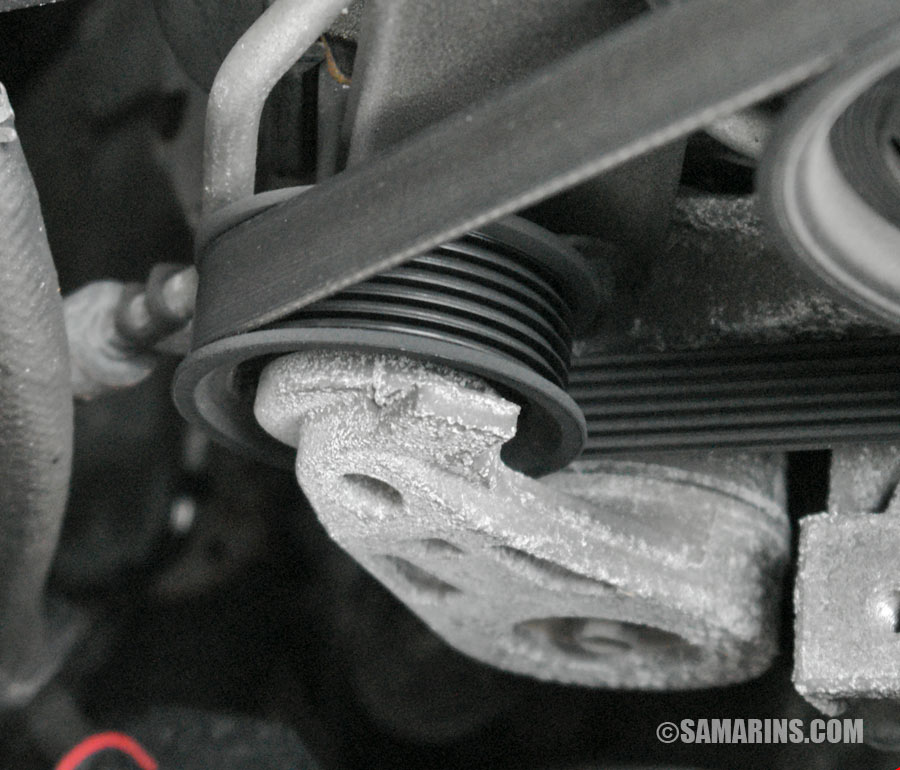 An automatic spring-loaded belt tensioner can seize up inside or wear out on its shaft
We have seen seized belt tensioners causing a loose serpentine belt to roll off the tensioner. The symptoms of a loose serpentine belt include a loud squealing noise when the engine is started or when the steering is turned all the way to one side. A serpentine belt that keeps slipping off the pulley is another symptom of a bad tensioner.
The solution is to replace a serpentine belt and a belt tensioner. A spring-loaded automatic belt tensioner costs $20-$50 for the part, plus the labor ($75-$170).
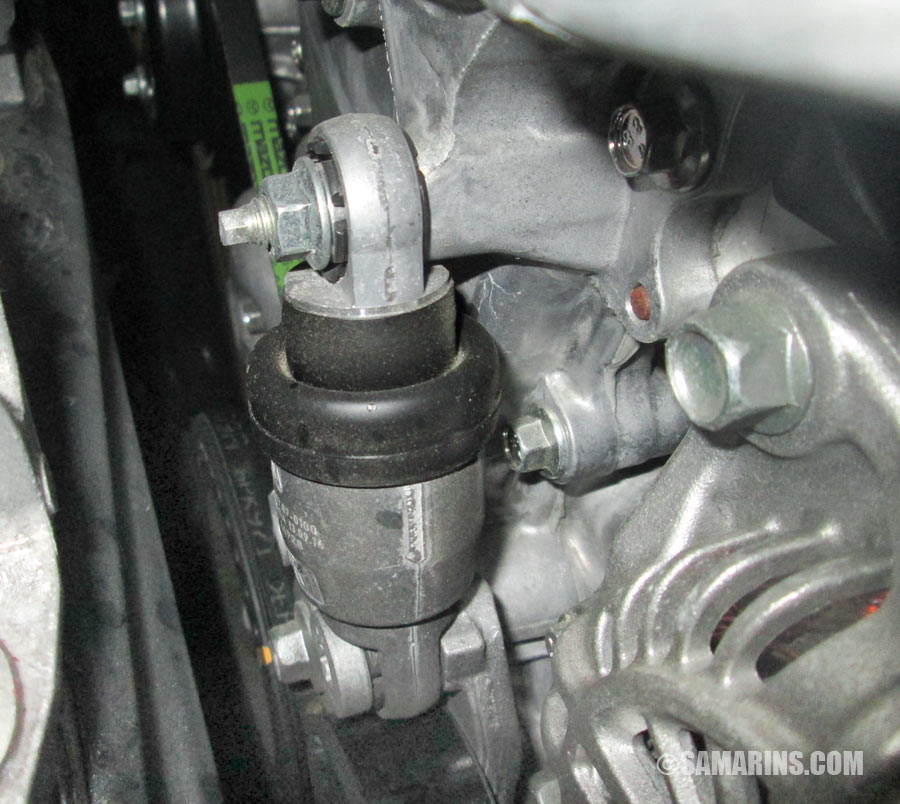 Often you can spot a hydraulic belt tensioner like this one is leaking oil.
 Symptoms include a leak from the tensioner or a rattling noise from the belt area when the engine is running. This item is common to fail in many cars including Toyota Corolla, Matrix, BMW and Mazda cars.
The fix is the same; a bad tensioner must be replaced. The belt should be replaced too, unless it's in like-new condition. A hydraulic belt tensioner costs anywhere from $35 to $75. The labor to replace it is $75-$170.
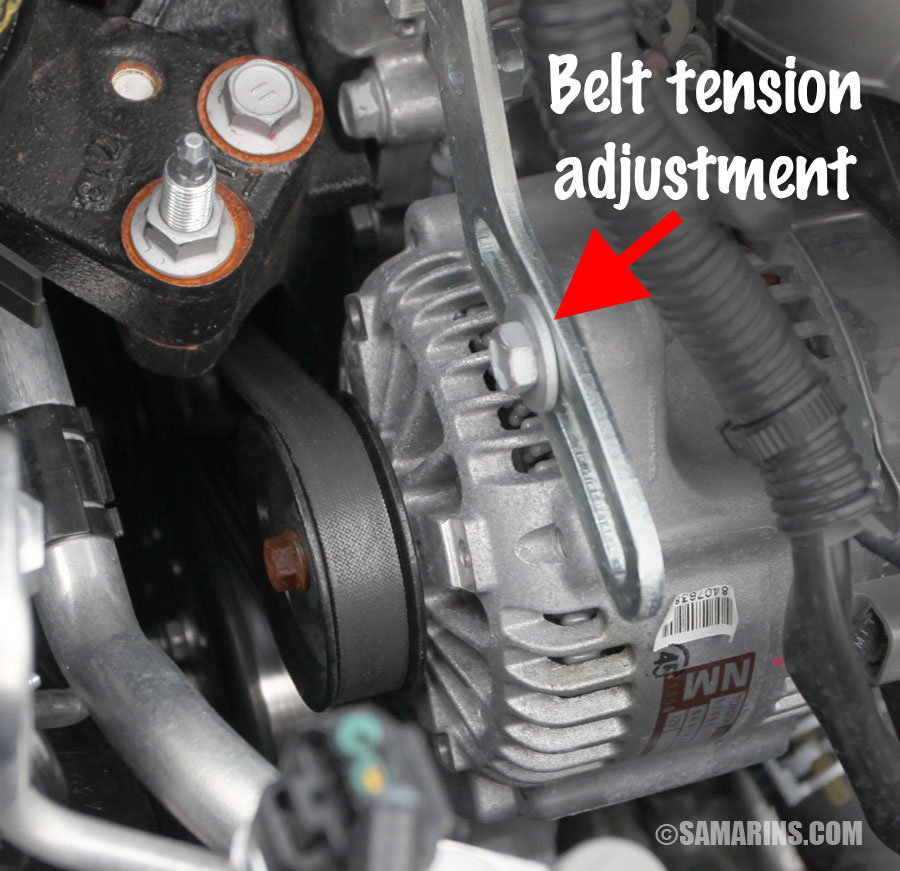
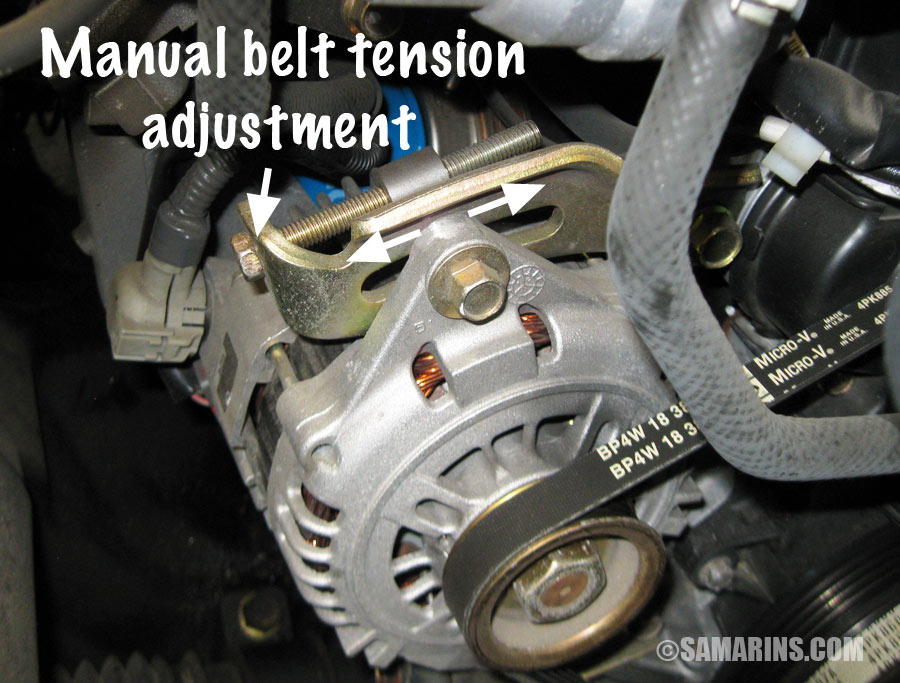 Mazda Miata manual drive belt tensioner adjustment.
The solution is simple: if the belt is still in good shape, the tension needs to be re-adjusted. If the belt is bad, it needs to be replaced and properly tightened.
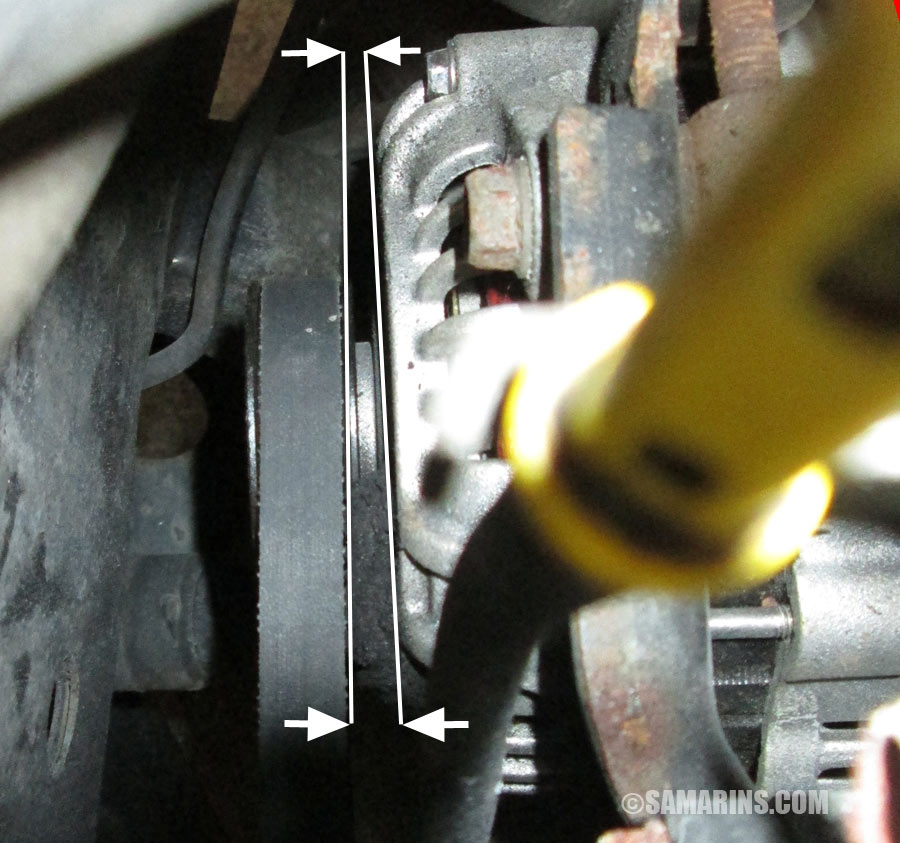 The alternator in this photo is not lined up with the belt and other pulleys. This caused the belt to squeal and wear faster.
Sometimes, you can visually see when one of the pulleys is not lined up. For example, in this car, in the photo, an alternator and a belt have been replaced while on a trip, a few weeks ago. Now the belt squeaks. Upon closer inspection, we found that the alternator was loose and shifted under angle. This caused the alternator pulley to be misaligned with the belt, so the belt was squealing and wearing out faster. If you look closer in the photo, you can see rubber shavings in the area between the belt and the alternator.
The fix, in this case, was to replace the belt and worn-out alternator bolts to align the alternator.
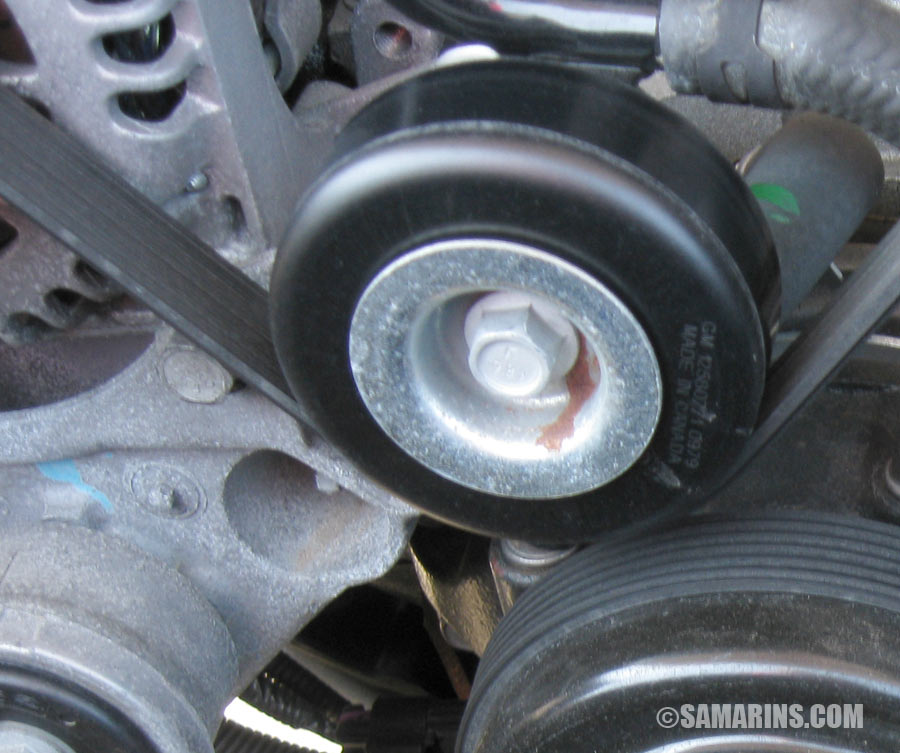 A failed bearing in one of the idler pulleys like this one is another common source of the noise.
7. Noisy idler pulley or tensioner bearing. To route a serpentine belt, many cars use free-spinning pulleys like the one in the photo. It's called an idler pulley. It spins on a little bearing. When that bearing goes bad, it can produce a whining/whirring or screeching noise. Because several belt-driven devices can make a similar noise, this one might take some time to diagnose.
Mechanics use a special stethoscope to look for the source of noise. A bad bearing inside the alternator, A/C compressor or power steering pump produces the same type of noise. A mechanic might have to remove a belt and check the devices that are run by a belt one by one.
The repair will depend on what part is bad. If it's just an idler, it's not very expensive: $15-$35 for the part plus $60-$170 labor. Replacing an A/C compressor or alternator could cost from $450 to $850.
When a serpentine belt needs to be replaced
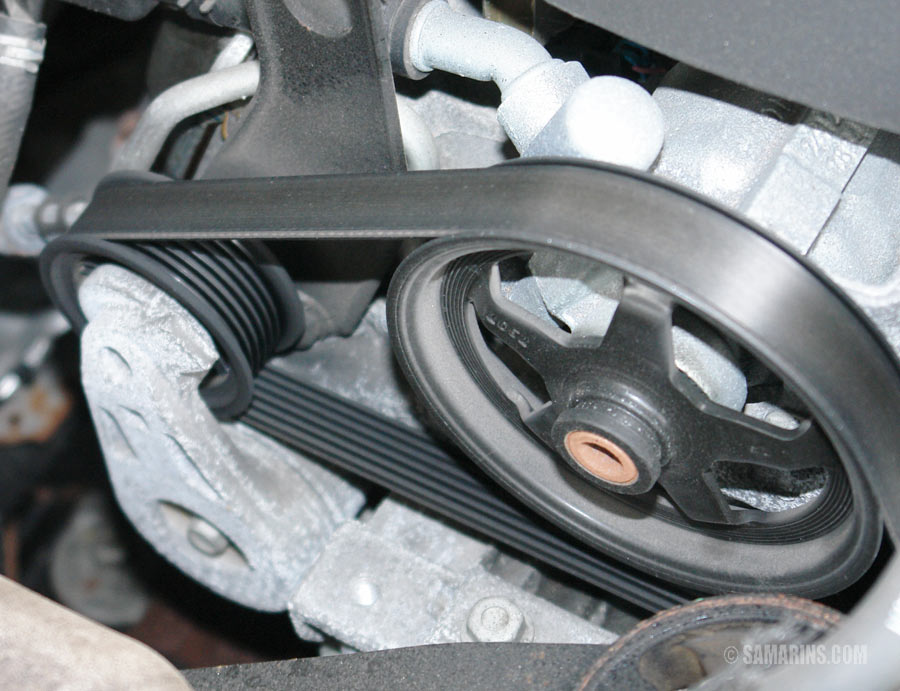 This serpentine belt is still in good shape, no need to replace it yet.
 Initial inspection at 60,000 miles/72 months. Inspect every 15,000 miles/18 months thereafter.
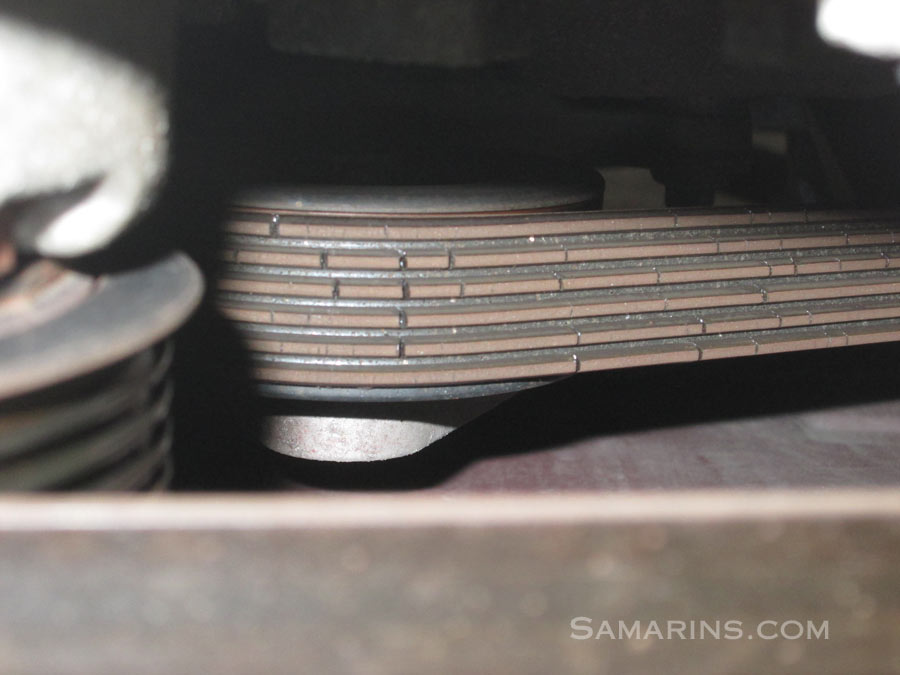 This serpentine belt shows cracks, it needs to be replaced
Serpentine belt replacement cost
If your car has two belts, we recommend replacing both at the same time, because you are saving on labor. It's also a good idea to replace an old serpentine belt before a long road trip. Replacing a serpentine belt costs $18-$75 part plus $50-$150 labor.How easy is it to replace a serpentine belt DIY?
On the scale from 1 (easy) to 10 (leave it to pros) the serpentine belt replacement can be rated from 3 to 7 depending on the car. To replace a serpentine belt, you will need a belt diagram that shows the routing. For some cars, the routing is shown in the owner's manual. Another way is to draw a routing diagram before removing the old belt.Advertisement
In many front-wheel drive cars with a transversely-mounted engine, the space between the engine and the frame is limited and changing a serpentine can be tricky.
In some cars, a special tool is needed to release the belt tensioner. To order a serpentine belt you might need a VIN number, as the belt could be different for different years and engines. It's a good idea to compare the new belt to the old one before installing to make sure the part is right.
If you need proper repair instructions, we posted a list of websites offering paid access to service manuals for different cars at the bottom of this article. Of course, there is YouTube with thousands of auto enthusiasts posting DIY videos.


 © Samarins.com 2000–2021. All rights reserved.